|
|
|
This Hebel website originated in March 2004 from a school project at the
Hausen i. W. secondary school—which still existed at the time—entitled
“Materials by Students for Students,” which aimed to adapt both the
Alemannic poems and the calendar stories for the Internet.
The results of this work were first presented on the school’s website
and subsequently on the municipality’s website as well. Over the years,
the project developed a momentum of its own that was initially
unforeseeable, and I continued it even after the closure of the Hausen
i. W. secondary school—gradually adding the letters, the riddles and
charades, the biblical stories, the Christian catechism, and the sermons,
along with a large body of other prose, thus resulting in a nearly
complete collection of Hebel’s primary literature by the year 2025, with
a scope that no other sources—neither on the Internet nor on the book
market (not even the “Gesammelte Werke" - "Collected Works” published in 2019)—can offer.
The collection available on this website,
“J. P. Hebel—Complete Works and Writings / Internet Edition 2004–2026,”
contains nearly all texts currently available in print and digitally (see
further details below on this page). The collection is rounded out by
original manuscripts—the vast majority of these “autographs” have been
transcribed and published by us for the very first time. This primary
body of work is supplemented by additional information and an extensive
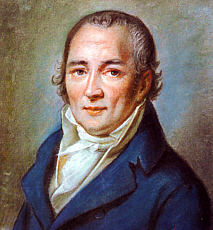
collection of images—including portraits of the author, primarily
related to his biography and life in Basel, Hausen, and Karlsruhe, but
also, for example, depicting the recipients of his letters. However,
with a few exceptions (e. g., C. F. Kölle’s eulogy), secondary literature
has been largely omitted.
This collection cannot and does not intend (!) to be a
“historical-critical” edition of Hebel’s works, nor—with a few
exceptions, such as the autographs that have not yet been transcribed or
published—a annotated edition; however,
it makes available, for the first time ever, a collection of his texts
that is, in principle, complete and gathered in one place—the primary texts can be accessed from the home or “branch” page with a
maximum of 2 clicks, and supplementary information with 3 clicks.
I am fully aware of the problematic and controversial nature of the
textual situation in many respects, especially because the “classic”
Hebel editions served as the foundation and point of reference when
transcribing the texts—unless the autographs held by the Badische
Landesbibliothek in Karlsruhe and other libraries were transcribed: The
Complete Works of 1832/34; the editions by Becker, Laengin, Obser,
Sütterlin, Altwegg, and Zentner; the Winkler Poetics edition; Rohner’s
calendar facsimile, etc.—see the references on the respective category
pages.
I’m staying out of the debate over whether these experts on Hebel’s
manuscripts were “good or bad readers of Hebel’s handwriting”—it is well
known that the respective authors adapted the texts (in some cases
extremely) to reflect the prevailing spirit of the times, as well as the
conventions of spelling, syntax, and punctuation (which has led, in some
cases, to significant differences—particularly in Zentner’s work—between
the printed edition and the autographs)—but this does not prove that
they were unable to read and transcribe the texts correctly—after all,
they were much closer in time to Hebel’s "German Kurrent" handwriting than any
contemporary authors (including, of course, myself)!
Two aspects, however, are problematic: 1. the doubts recently expressed
by various parties regarding the attribution of individual texts to
Hebel; 2. the fact that texts—which, according to Hebel’s own statements
in his letters (the calendar entries for the year 1816), definitely did
not originate from him—are suddenly being attributed to him—as is also
the case in the complete works mentioned below.
In my opinion, it is not the task of the volunteer-run website of the
municipality of Hausen i. W. to “reinvent the ‘Hebel wheel’”; I’m happy
to leave that to the professional Hebel scholars—a complete works
edition was finally published in 2019, after decades of announcements,
in a form that is thoroughly and highly open to criticism and,
especially when compared to this website, it is far from complete. It is
regrettable—indeed, almost brazen—that, under the pretense of publishing
“all texts,” —the omission of the approximately 50 letters discovered
since/after Zentner—in particular those listed on the "Kalliope" website and which would have been readily accessible to the authors—as
well as the exclusion of the riddles and charades and nearly all of the
sermons (which, incidentally, were already printed in the complete
edition of 1832–34). This also includes the absence, for example, of the
“General Reflections” and the nearly complete third volume of the
“Unpublished Papers,” which have been available for years on the BLB
Karlsruhe website as digitized versions of the autographs.
With the transcriptions of autographs that began in 2017, these specific
texts are now being made accessible to Hebel enthusiasts who are unable—or
only able to a limited extent—to read Hebel’s handwriting—the “German
Kurrent Script”—in the digitized versions from the BLB Karlsruhe and
other sources. Around 150 autographs have now been posted—a large
portion of them displayed side-by-side with the transcribed text—and
links are provided to additional ones, particularly those held at the
Baden State Library in Karlsruhe.
My goal has been and remains to provide Hebel enthusiasts around the
world (indeed, if one looks at the access statistics for the past 20
years since the site’s launch—on October 17, 2025, the number of
visitors reached 1.5 million—from more than 70 countries with over 16
million page views) to provide quick, easy, and comprehensive access to
Hebel’s Œuvre—without having to track down the texts in numerous
different books, some of which are current but many of which are now
available only (if at all) through antiquarian sources, or having to
click through numerous websites. Last but not least, a whole series of
primary texts is available in printed form exclusively on this website.
The latest projects on this website are designed precisely to serve this
goal: the translations of the Alemannic poems into High German and
English—supplemented by the hymn “Ekstase” from 1793, as well as
translations of various calendar stories and biblical stories into
English. Visits and inquiries, particularly from the English-speaking
world, have increased enormously since the publication of the current
approximately 230 English texts; furthermore, various books and articles
on Hebel have been published and are still to be published, making these
projects seem both appropriate and necessary at this time.
Even though Hebel himself was not very convinced of—not to say opposed
to—a translation of the poems into High German, times have certainly
changed. However, a translation into High German was an indispensable
prerequisite for an adequate translation into English. The key point
here is that this project focuses, as far as possible, on literal
translations—and not, as has been the case exclusively in the past (with
varying degrees of success), on adaptations! In this process, I have
found that, contrary to the claims that are repeatedly made and
thoughtlessly copied, the style of Hebel’s Alemannic poems is very well
and largely preserved in High German, since he actually uses very few
specific and virtually untranslatable “Alemannicisms.” And thanks to
ever-improving algorithms in professional translation programs, the
“literal translations” into English also offer an impressive and very
close approximation of J. P. Hebel’s language and tone.
For our English-speaking visitors, there are—in addition to the already
translated “Bible Stories”—further offerings: Translations of the two
most important calendar stories, “Unverhofftes Wiedersehen” and
“Kannitverstan” (more followed in 2026), as well as two essays—one on
Hebel’s life and work and a comparison of the two “Falun stories”—by
Hebel (“Unverhofftes Wiedersehen”) and by E.T.A. Hoffmann (“Die
Bergwerke zu Falun”).
1. Juli 2026

Hansjürg Baumgartner
Webmaster J-P-Hebel @ Hausen-im-Wiesental
|
|


|

