| zurück |
Der Ursprung: Hebels Quelle für
sein Unverhofftes Wiedersehen The origin: Hebel's source for his 'Unexpected Reunion'
|
||||||
|
|
|
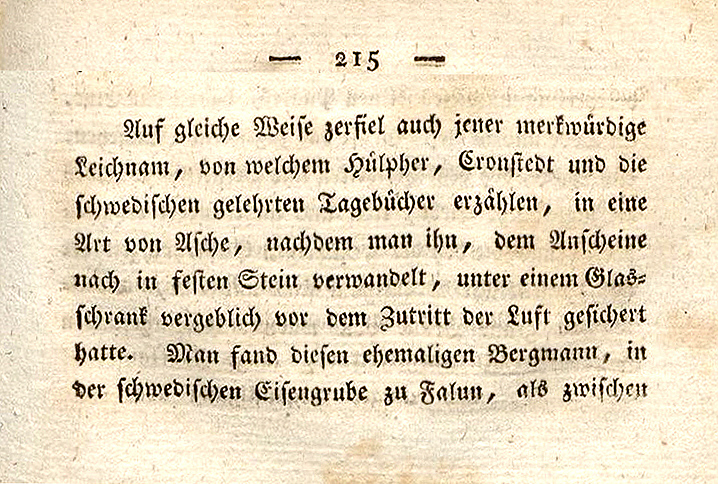
In the same way, that strange corpse described by Hülpher, Cronstedt, and the Swedish scholarly journals disintegrated into a kind of ash after it had been transformed into solid stone, apparently, and placed under a glass cabinet to protect it from the air, to no avail. This former miner was found in the Swedish iron mine at Falun when, between |
|
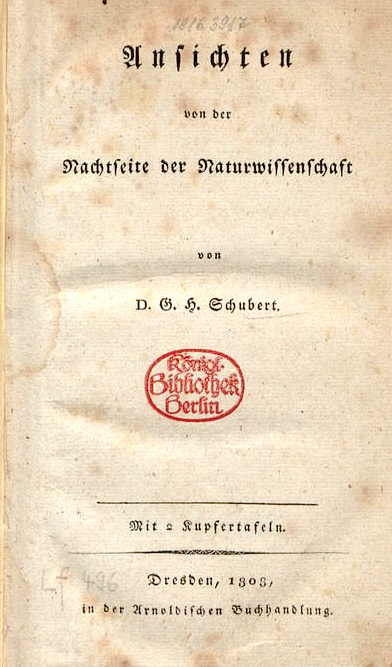
Gotthilf Heinrich Schubert
|
|||
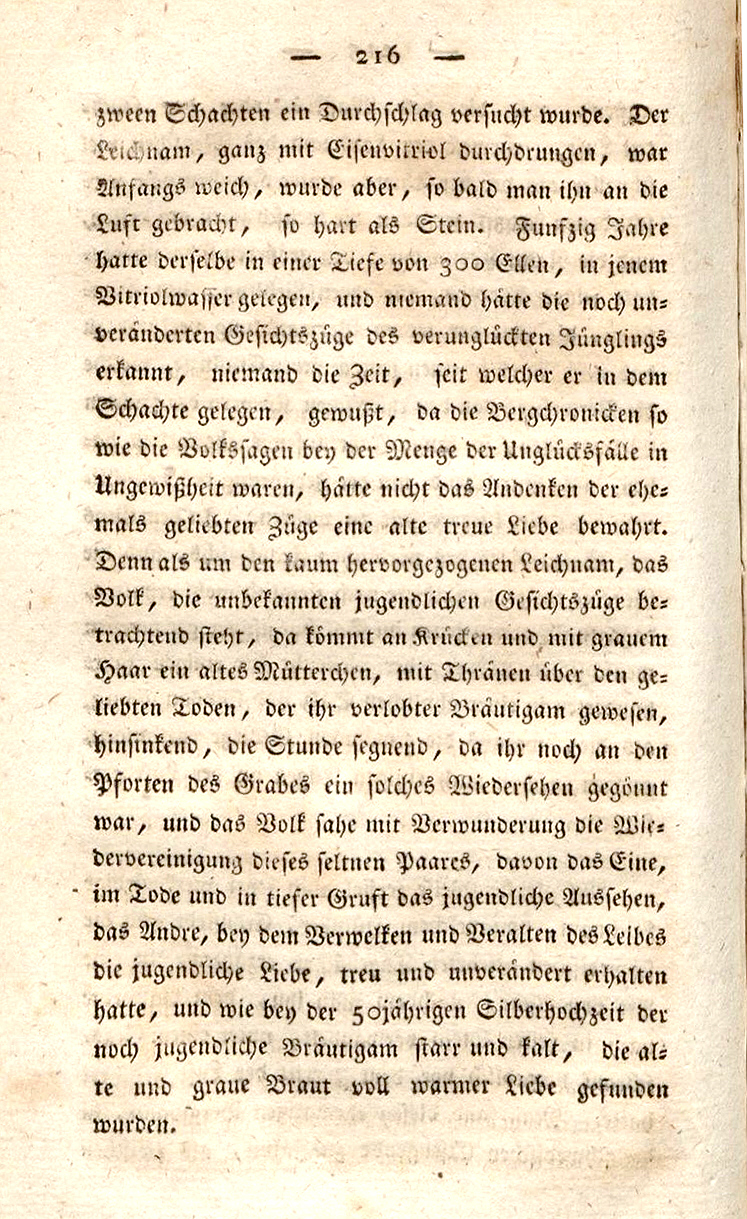 |
two shafts an attempt was made to break
through. The corpse, completely saturated with iron vitriol, was soft at
first, but as soon as it was exposed to the air, it became as hard as
stone. It had lain in that vitriol water at a depth of 300 ells for
fifty years, and no one would have recognized the unchanged features of
the unfortunate young man, no one would have known how long he had been
lying in the shaft, since the mining chronicles and folk tales were
uncertain due to the large number of accidents, had it not been for the
memory of his once beloved features preserved by an old faithful love. For as the people stood around the barely extracted corpse, looking at the unfamiliar youthful features, an old woman came, walking on crutches and with gray hair, weeping over the beloved dead man who had been her fiancé, blessing the hour when she was granted such a reunion at the gates of the grave, and the people watched with amazement the reunion of this rare couple, one of whom, in death and in a deep grave, retained his youthful appearance, the other, despite the withering and aging of her body, had retained her youthful love, faithful and unchanged, and how, at their 50th silver wedding anniversary, the still youthful groom was found stiff and cold, and the old and gray bride full of warm love. |
||||||
| zurück |
|
||||||